<p>Managing invoices manually can be a time-draining process that leads to errors, late payments, and cash flow issues - especially for SMBs in the UAE. Moving to digital invoicing and automation can resolve these pain points while preparing businesses for the UAE's mandatory e-invoicing regulations starting July 2026. Here's a quick overview of how to improve your invoicing process:</p>
<ul>
<li>
<strong>Switch to Digital Invoicing</strong>: Eliminate manual errors, reduce costs, and comply with UAE's upcoming e-invoicing rules.
</li>
<li>
<strong>Connect to ERP Systems</strong>: Automate data flow for accurate financial reporting and better decision-making.
</li>
<li>
<strong>Automate Payment Collection</strong>: Use reminders and payment tracking to reduce delays.
</li>
<li>
<strong>Offer Multiple Payment Methods</strong>: Provide options like credit cards, <a href="https://www.sadad.com/en" target="_blank" rel="nofollow noopener noreferrer" style="display: inline;">Sadad</a>, and <a href="https://www.apple.com/ae/apple-pay/" target="_blank" rel="nofollow noopener noreferrer" style="display: inline;">Apple Pay</a> to encourage faster payments.
</li>
<li>
<strong>Track Invoices in Real-Time</strong>: Use dashboards for visibility into payment statuses and trends.
</li>
<li>
<strong>Ensure Compliance and Security</strong>: Protect sensitive data and stay VAT-compliant automatically.
</li>
</ul>
<p>These steps not only save time but also improve cash flow, reduce administrative work, and align with local regulations. Adopting tools like <a href="https://kema.co/" style="display: inline;">Kema</a>’s platform simplifies the transition by integrating automation, compliance, and customer-centric features into a single solution.</p>
<h2 id="how-to-automate-your-invoicing-easy-billing-for-your-clients" tabindex="-1" class="sb h2-sbb-cls">How to Automate Your Invoicing (Easy Billing For Your Clients)</h2>
<iframe class="sb-iframe" src="https://www.youtube.com/embed/b9VVrMiNuKo" frameborder="0" loading="lazy" allowfullscreen style="width: 100%; height: auto; aspect-ratio: 16/9;"></iframe><h2 id="step-1-switch-to-digital-invoicing" tabindex="-1" class="sb h2-sbb-cls">Step 1: Switch to Digital Invoicing</h2>
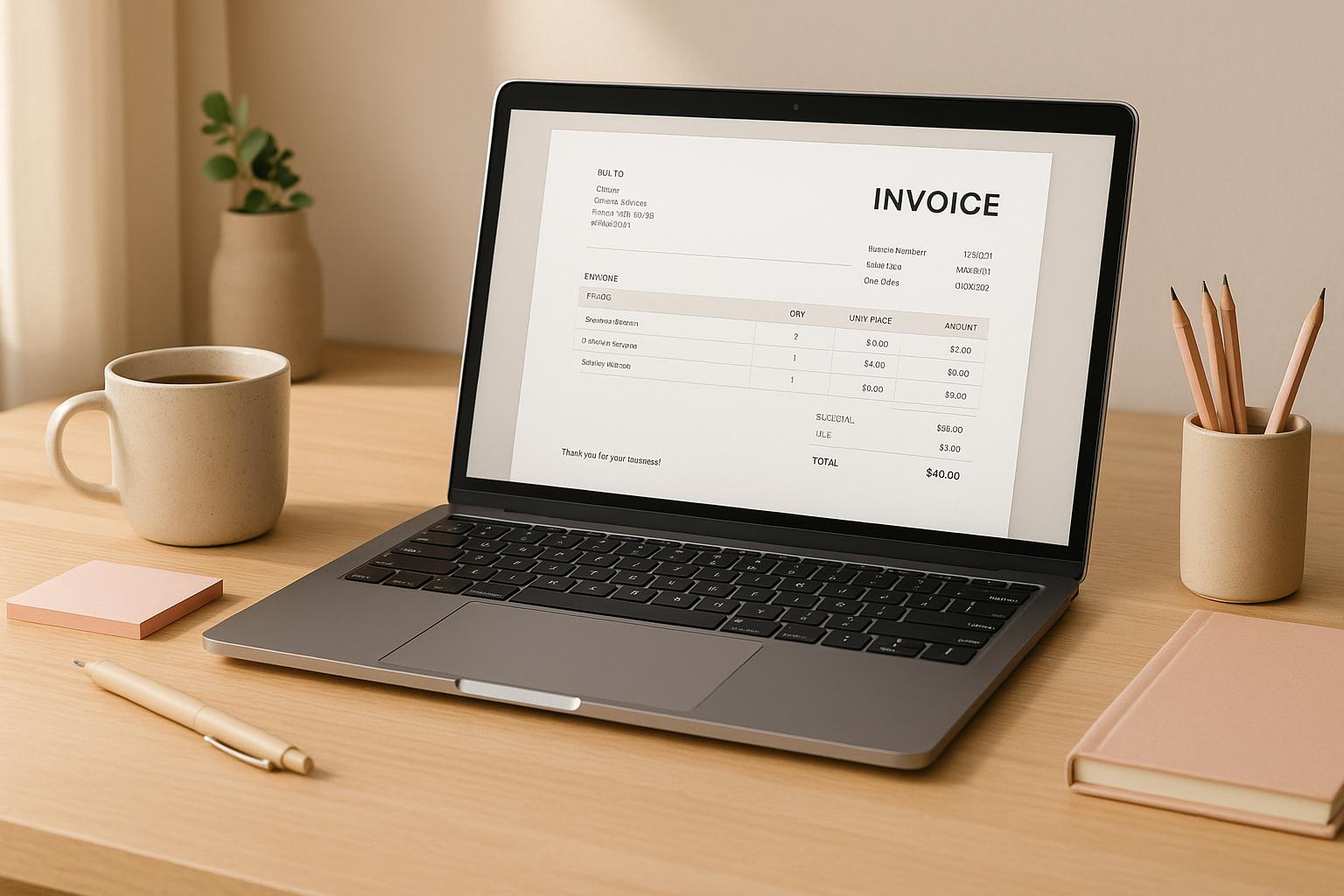
<p>Switching from paper-based invoicing to digital invoicing isn't just about staying current with technology - it’s about streamlining your operations. By going digital, you eliminate the need for printing, posting, and manual tracking, all while reducing errors that can delay payments and strain customer relationships.</p>
<p>This change is particularly timely with the UAE's upcoming e-invoicing regulations. From July 2026, structured e-invoicing will be mandatory for B2B and B2G transactions. Early adopters stand to gain smoother compliance and a competitive edge. Making the switch now can help you simplify processes and prepare for these future requirements.</p>
<p>Studies show that e-invoicing can lower invoice processing costs by up to 66%. These savings come from cutting out paper, printing, and postage costs, as well as reducing the time spent on manual invoice management.</p>
<p>Let’s look at how automation plays a key role in these improvements.</p>
<h3 id="use-automated-invoice-creation" tabindex="-1">Use Automated Invoice Creation</h3>
<p>Automated invoice creation pulls data directly from your sales records, ensuring accurate calculations and consistent formatting. This drastically reduces the risk of errors, such as incorrect AED amounts, VAT miscalculations (5%), or missing customer details.</p>
<p>For instance, Kema's automated invoice creation tool ensures every invoice includes complete customer information, detailed charges, and precise VAT calculations. What once took hours of manual data entry can now be completed in minutes - especially beneficial for businesses with recurring or subscription-based billing.</p>
<p>Additionally, automated systems ensure compliance with UAE tax regulations by including all necessary fields, such as Tax Registration Numbers (TRNs), accurate VAT breakdowns, and proper invoice numbering sequences. This level of accuracy is essential as the UAE moves toward mandatory e-invoicing standards, which require specific data formatting.</p>
<h3 id="send-invoices-digitally" tabindex="-1">Send Invoices Digitally</h3>
<p>Digital delivery makes sending invoices almost instant. By emailing invoices, you ensure they reach customers immediately, often with delivery confirmations or read receipts - something traditional mail cannot offer. This speeds up your payment cycle and improves cash flow.</p>
<p>Digital invoices also come with advanced security options. They can be encrypted, password-protected, and sent through secure channels, maintaining an audit trail for compliance purposes.</p>
<p>The UAE’s upcoming e-invoicing regulations will require invoices to be in structured, machine-readable formats - like XML or UBL - aligned with the UAE PINT AE specification. While PDFs currently meet VAT content requirements, they won’t suffice under the new Phase 2 rules, which demand structured data for automated processing.</p>
<p>Kema’s digital delivery system simplifies this process by offering multiple channels, including email, SMS, and <a href="https://business.whatsapp.com/" target="_blank" rel="nofollow noopener noreferrer" style="display: inline;">WhatsApp</a>, to ensure invoices reach customers through their preferred method. The platform also provides detailed delivery logs, showing when invoices were sent, delivered, and opened. These insights can help you better understand customer payment behaviours.</p>
<p>Digital delivery also enhances customer service. If a customer has a question or needs a document resent, you can respond quickly, reducing delays and building stronger customer relationships.</p>
<h2 id="step-2-connect-your-invoicing-to-erp-systems" tabindex="-1" class="sb h2-sbb-cls">Step 2: Connect Your Invoicing to ERP Systems</h2>
<p>Linking your invoicing system to an ERP platform creates a centralised financial system that eliminates the need for manual data entry and prevents information from being isolated in different systems. When these systems are connected, data moves freely between departments, ensuring that sales figures, inventory updates, customer records, and financial reports are always in sync and up to date.</p>
<p>This kind of integration is especially important as your business grows and processes more transactions. With connected systems, every transaction automatically updates all related modules. This not only makes daily operations smoother but also supports better, data-informed decision-making.</p>
<p>An integrated setup provides a single dashboard where you can track transactions from the initial quote to final payment. This complete view helps identify inefficiencies and offers accurate cash flow forecasts, enabling smarter, more confident decisions based on real-time data.</p>
<h3 id="benefits-of-erp-connection" tabindex="-1">Benefits of ERP Connection</h3>
<p>By integrating with an ERP system, your invoicing process becomes fully automated, ensuring data is synchronised across all business functions. For instance, when a sale is finalised, the system updates inventory levels, generates an invoice, records the transaction in your accounting system, and initiates any necessary follow-ups - all without manual input.</p>
<p>This automation not only saves time but also reduces the risk of errors that often occur when data is transferred manually. For example, if a customer updates their contact details in your CRM, the new information is instantly reflected in your invoicing system, ensuring invoices are always sent to the correct address.</p>
<p>Kema’s ERP integration works seamlessly with widely used platforms like <a href="https://www.odoo.com/" target="_blank" rel="nofollow noopener noreferrer" style="display: inline;">Odoo</a>, <a href="https://www.microsoft.com/en-us/dynamics-365" target="_blank" rel="nofollow noopener noreferrer" style="display: inline;">Microsoft Dynamics</a>, <a href="https://www.zoho.com/" target="_blank" rel="nofollow noopener noreferrer" style="display: inline;">Zoho</a>, <a href="https://quickbooks.intuit.com/ae/" target="_blank" rel="nofollow noopener noreferrer" style="display: inline;">QuickBooks</a>, and <a href="https://www.workday.com/" target="_blank" rel="nofollow noopener noreferrer" style="display: inline;">Workday</a>. This ensures that your invoicing data flows smoothly into your existing financial processes, maintaining uniformity across your operations while respecting your current workflows.</p>
<p>It also improves reporting by combining invoicing data with other business metrics. This allows you to analyse payment trends alongside sales performance, inventory turnover, and customer behaviour, providing insights that would be difficult to uncover if these systems operated independently.</p>
<p>With real-time data synchronisation, financial reports are always accurate and up to date - an essential feature for tasks like month-end closings, tax preparation, or strategic planning. This seamless data flow also speeds up payment cycles, improving overall cash flow.</p>
<p>Additionally, connected systems enhance customer service. With immediate access to complete transaction histories, your team can quickly resolve invoice-related inquiries without needing to switch between multiple tools.</p>
<p>Beyond improving efficiency, ERP integration plays a crucial role in meeting the UAE’s strict compliance standards.</p>
<h3 id="meet-uae-compliance-requirements" tabindex="-1">Meet UAE Compliance Requirements</h3>
<p>Businesses in the UAE must adhere to specific invoicing regulations, particularly for VAT reporting and upcoming e-invoicing mandates. ERP integration ensures your invoicing system captures and formats all necessary compliance data automatically, aligning with local laws.</p>
<p>The 5% VAT requirement means invoices must be calculated and documented with precision, leaving no room for manual errors.</p>
<p>With the UAE’s e-invoicing rules set to take effect in July 2026, companies will need systems capable of generating machine-readable invoices that meet these new standards. Integration ensures compliance without requiring manual adjustments or reformatting.</p>
<p>Integrated systems also support the detailed audit trails mandated by UAE tax authorities. Each transaction is logged with timestamps and user details, providing the documentation needed for both regulatory compliance and internal audits.</p>
<p>For businesses managing multiple entities or subsidiaries in the UAE, ERP connections simplify Tax Registration Number (TRN) management by automatically including the correct TRN on invoices based on the legal entity involved in the transaction.</p>
<p>Moreover, VAT return preparation becomes much easier. Transactions are automatically categorised, and the appropriate amounts are calculated for each reporting category. This automation saves time, reduces effort, and minimises the risk of errors that could attract regulatory attention.</p>
<p>Kema’s ERP integration ensures ongoing compliance by updating invoice formats and calculations automatically as regulations evolve, so your business stays aligned with legal requirements without constant manual intervention.</p>
<h2 id="step-3-automate-payment-collection" tabindex="-1" class="sb h2-sbb-cls">Step 3: Automate Payment Collection</h2>
<p>After ensuring smooth data integration, the next step is to automate your payment collection process. Relying on manual payment collection often creates inefficiencies, slows down cash flow, and distracts from focusing on business growth. By automating this process, you can establish efficient payment workflows that operate without constant oversight.</p>
<p>Modern payment systems take care of the heavy lifting by tracking payment statuses, sending reminders at the right time, and escalating overdue accounts when necessary. This ensures invoices are processed promptly while preserving good relationships with your customers. The result? Faster payments and less time spent chasing overdue accounts.</p>
<p>For businesses in the UAE, automation is especially helpful given the diverse mix of local and international clients. Each customer may have unique payment preferences or banking setups. Automated systems allow businesses to cater to these differences seamlessly, reducing the workload for finance teams while maintaining flexibility.</p>
<p>Next, let’s look at how offering a variety of payment methods can further speed up the process.</p>
<h3 id="offer-multiple-payment-methods" tabindex="-1">Offer Multiple Payment Methods</h3>
<p>Giving customers several payment options simplifies the process and removes barriers to timely payments. When customers can choose how they want to pay, they’re less likely to delay because of inconvenient or unfamiliar payment methods.</p>
<p>In the UAE, offering options like credit cards, Sadad, or wire transfers can cover a wide range of preferences. For example:</p>
<ul>
<li>
<strong>Apple Pay</strong>: Increasingly popular among businesses using mobile devices for transactions.
</li>
<li>
<strong>Sadad Payments</strong>: Essential for working with government entities or large corporations that often prefer this system.
</li>
<li>
<strong>Wire Transfers</strong>: Ideal for high-value transactions, though they may take longer to process.
</li>
</ul>
<p>Kema’s branded payment pages take this a step further by displaying your company’s logo, colours, and personalised messaging. This not only reinforces trust but also creates a seamless experience from invoice to payment completion. Payment links can be embedded directly into invoices or shared separately via email, SMS, or WhatsApp, making it easy for customers to pay whether they’re at their desk or on the go.</p>
<p>Having multiple payment options also reduces delays caused by unforeseen issues like system outages. If one method isn’t available, customers can quickly switch to another without needing support from your team.</p>
<p>Once payment methods are in place, automating follow-up communication ensures that payments are made on time.</p>
<h3 id="set-up-automated-payment-reminders" tabindex="-1">Set Up Automated Payment Reminders</h3>
<p>Automated reminders are a game-changer, replacing manual follow-ups with consistent, professional communication. These reminders can be sent through email, SMS, or WhatsApp, ensuring they reach customers via their preferred channel.</p>
<p>Customising the timing of these reminders allows you to balance professionalism with urgency. For example, you can set reminders to align with specific payment terms or client relationships. WhatsApp reminders are particularly effective in the UAE, where the platform is widely used for business communication. These often achieve higher response rates compared to other methods.</p>
<p>SMS reminders are ideal for urgent messages since they tend to grab immediate attention. However, they should be used sparingly to avoid coming across as intrusive. Emails, on the other hand, are great for detailed communication and provide a formal record of payment requests.</p>
<p>Advanced systems can even escalate reminders based on how overdue the invoice is. For example, routine reminders might come from the accounts team, but significantly overdue accounts could trigger notifications to account managers or senior staff who have a closer relationship with the customer.</p>
<p>Another benefit of automation is tracking customer responses and payment behaviours. This data helps identify which communication methods are most effective for different customer groups, enabling you to refine your approach over time.</p>
<p>The system can also pause reminders automatically when a customer makes a partial payment or confirms a payment date. This prevents unnecessary follow-ups that could irritate customers who are already engaged in the process, ensuring a smoother payment collection experience for everyone involved.</p>
<h6 id="sbb-itb-9013b54" class="sb-banner" style="display: none;color:transparent;">sbb-itb-9013b54</h6>
<h2 id="step-4-track-invoices-with-real-time-data" tabindex="-1" class="sb h2-sbb-cls">Step 4: Track Invoices with Real-Time Data</h2>
<p>Once you've automated your payment collection process, the next step is to gain full visibility into your invoicing pipeline. Keeping a close eye on the entire payment journey - from when an invoice is issued to when it's reconciled - helps you spot problems early and fine-tune your cash flow projections. This is particularly important for UAE SMBs that serve a wide range of customers, including government bodies and international clients.</p>
<h3 id="use-dashboards-to-gain-clear-insights" tabindex="-1">Use Dashboards to Gain Clear Insights</h3>
<p>Dashboards are a powerful tool for turning raw data into meaningful insights. A well-designed dashboard brings all your invoicing data into one place, making it easier to track key metrics like average payment time, overdue amounts by customer, and payment success rates. You can even break these metrics down by payment method - whether it's Sadad, wire transfer, or card payments - to identify trends and adjust your invoicing approach.</p>
<p>Visual tools like graphs and charts also help you quickly spot patterns or bottlenecks. For example, ageing reports and payment histories displayed on the dashboard allow your finance team to prioritise follow-ups and allocate resources more effectively. With the ability to dive deeper into individual invoice details from a high-level summary, dashboards become a valuable asset for both strategic planning and day-to-day operations.</p>
<h3 id="keep-tabs-on-payment-status-in-real-time" tabindex="-1">Keep Tabs on Payment Status in Real-Time</h3>
<p>Dashboards are just the start - real-time monitoring takes visibility to the next level. By tracking payment statuses live, you can address delays or issues instantly. For instance, Kema’s AR dashboard offers live updates as invoices move through each stage, whether a customer has clicked on an invoice link or completed a payment. This level of tracking makes it easier to pinpoint where delays are happening.</p>
<p>Real-time tracking also captures partial payments and failed attempts, giving you a detailed view of customer activity. This is especially useful for businesses with recurring invoices or subscription models, as it allows for immediate follow-up on failed transactions.</p>
<p>Additionally, having real-time payment data on hand enhances customer service. When customers ask about their account status or payment options, your team can provide accurate and up-to-date information right away. This not only builds trust but can also speed up the payment process, improving overall efficiency.</p>
<h2 id="step-5-offer-flexible-payment-terms-and-invoice-financing" tabindex="-1" class="sb h2-sbb-cls">Step 5: Offer Flexible Payment Terms and Invoice Financing</h2>
<p>Improve your invoicing approach by offering flexible payment terms and <a href="https://www.kema.co/invoice-financing" style="display: inline;">invoice financing</a>. These strategies can help UAE SMBs tackle cash flow challenges while meeting diverse customer payment preferences. This is especially critical when dealing with extended payment cycles tied to government contracts or international clients. By combining better tracking and automation with these options, you can align your cash flow goals with customer needs.</p>
<h3 id="provide-flexible-payment-options" tabindex="-1">Provide Flexible Payment Options</h3>
<p>B2B customers increasingly expect the same level of payment flexibility they experience in personal transactions. Offering varied payment terms isn’t just about being accommodating - it’s a smart way to reduce payment delays and improve collection rates. When customers can select payment schedules that match their cash flow patterns, they’re more likely to pay on time.</p>
<p>Breaking down large invoices into instalments is another effective strategy. It ensures a steady revenue stream for your business while reducing financial pressure on your clients. This approach works particularly well for project-based businesses or those offering ongoing services, as it creates predictable income while supporting long-term customer relationships.</p>
<p>Extended payment terms, such as net 45 or net 60, can also help you secure larger contracts and retain key clients. However, balancing these extended terms with your business’s cash flow needs is crucial. This is where invoice financing can make a significant difference.</p>
<h3 id="use-invoice-financing-for-faster-cash-flow" tabindex="-1">Use Invoice Financing for Faster Cash Flow</h3>
<p>Invoice financing allows you to convert outstanding receivables into immediate funds, giving you access to up to 95% of your invoice value - often within just one business day. This is especially useful for UAE SMBs dealing with long payment cycles from government organisations or large corporations.</p>
<p>If flexible terms alone don’t meet your cash flow needs, invoice financing ensures you have immediate access to funds. For instance, Kema’s financing feature advances up to 95% of an invoice’s value within one business day, helping you maintain operational cash flow while waiting for customer payments.</p>
<p>The process integrates seamlessly with your existing invoicing system. Once an invoice is issued and approved for financing, the funds are typically available within one business day. The remaining balance is transferred once the customer completes their payment, ensuring a smooth and efficient workflow.</p>
<p>Integrated financing platforms also simplify risk assessment and credit management. They use advanced algorithms to automatically evaluate customer creditworthiness and payment history, reducing the need for manual credit checks and minimising the risk of defaults.</p>
<p>For businesses that experience seasonal fluctuations or rely on project-based income, invoice financing provides the consistency needed to keep operations running smoothly. Whether you’re funding growth initiatives or covering operational expenses, this approach ensures you can seize new opportunities without cash flow disruptions.</p>
<h2 id="step-6-keep-your-invoicing-secure-and-compliant" tabindex="-1" class="sb h2-sbb-cls">Step 6: Keep Your Invoicing Secure and Compliant</h2>
<p>As you refine your invoicing process, ensuring security and compliance is critical to safeguarding your operations. With email compromises causing losses exceeding $109 million in 2024 and 60% of financial attacks originating from stolen credentials, protecting your invoicing system has never been more vital. For UAE businesses, the stakes are even higher due to stringent regulatory requirements, including VAT compliance and data protection laws. Failing to meet these standards can result in severe penalties.</p>
<p>For small and medium-sized businesses (SMBs), the consequences of a security breach can be catastrophic. As Complyance warns:</p>
<blockquote>
<p>A single data breach could lead to massive fines from regulators, loss of trust from your clients, and serious, long-term damage to your brand's reputation that is far more costly to repair than any fine.</p>
</blockquote>
<p>This makes strong security measures and regulatory compliance not an option but a necessity for business continuity.</p>
<h3 id="use-enterprise-grade-security" tabindex="-1">Use Enterprise-Grade Security</h3>
<p>Your invoicing system handles sensitive data like bank account details, transaction records, and Tax Registration Numbers (TRNs). This information demands the highest level of protection, no matter the size of your business. Fortunately, modern platforms offer enterprise-grade security solutions without requiring extensive in-house infrastructure.</p>
<p>Key measures include:</p>
<ul>
<li>
<strong>Data Encryption</strong>: Encrypt data both at rest and in transit to ensure it remains unreadable if intercepted. Use recognised encryption protocols to safeguard sensitive information.
</li>
<li>
<strong>Multi-Factor Authentication (MFA)</strong>: Adding a second layer of authentication significantly reduces the risk of unauthorised access. With human error responsible for 80% of major cyber breaches, MFA is a crucial defence.
</li>
<li>
<strong>Access Controls</strong>: Limit access to sensitive data based on roles, ensuring team members only see what is necessary for their tasks.
</li>
<li>
<strong>Regular Audits</strong>: Conduct vulnerability assessments to identify and address potential security gaps.
</li>
</ul>
<p>Kema's platform is a great example of how UAE SMBs can access enterprise-grade security through secure cloud infrastructure. This approach provides advanced encryption and protection typically reserved for large organisations, without the complexity or expense of building such systems from scratch.</p>
<p>In addition to technical safeguards, automating VAT compliance is another essential step to secure your business operations.</p>
<h3 id="stay-vat-compliant-automatically" tabindex="-1">Stay VAT-Compliant Automatically</h3>
<p>Pairing robust security with automated VAT compliance offers a comprehensive approach to invoicing. UAE VAT regulations are intricate and subject to change, making manual compliance both time-consuming and prone to errors. The UAE's e-invoicing framework requires secure digital archiving and tamper-proof audit trails, ensuring data integrity through digital signatures and encryption.</p>
<p>Automation not only reduces human error but also speeds up payment cycles while keeping your business compliant. Accredited Service Providers (ASPs) are instrumental in managing the complexities of UAE VAT compliance. Helal Alrefai from <a href="https://www.thomsonreuters.com/en" target="_blank" rel="nofollow noopener noreferrer" style="display: inline;">Thomson Reuters</a> explains:</p>
<blockquote>
<p>These controls are handled by the ASPs, which means businesses benefit from high levels of security and compliance without having to build it all in-house.</p>
</blockquote>
<p>For instance, the <a href="https://peppol.org/" target="_blank" rel="nofollow noopener noreferrer" style="display: inline;">Peppol</a> AS4 protocol employs PKI (Public Key Infrastructure) for digital signatures and encryption, enabling secure data exchange with the Federal Tax Authority (FTA). Automated tools also generate detailed transaction logs and VAT submission reports, ensuring accurate calculations and compliance with regulatory audits. This level of precision and consistency is difficult to achieve with manual processes.</p>
<h2 id="conclusion" tabindex="-1" class="sb h2-sbb-cls">Conclusion</h2>
<p>Implementing these six steps can revolutionise how your UAE SMB handles invoicing and cash flow. By adopting digital invoicing, you minimise manual errors and streamline your processes. Connecting your invoicing system with ERP platforms ensures smooth data integration while staying compliant with UAE VAT regulations. Automating payment collections through methods like card payments, Apple Pay, and Sadad speeds up cash inflow and reduces administrative burdens.</p>
<p>Real-time tracking offers the transparency needed to make smarter decisions about your accounts receivable. Flexible payment terms and invoice financing can provide immediate access to up to 95% of an invoice's value, giving your business a liquidity boost. Additionally, prioritising enterprise-level security and compliance protects your business from data breaches and regulatory challenges.</p>
<p>Kema's platform brings all these benefits together with its all-in-one solution. By combining automation, ERP integration, and compliance, Kema allows SMBs to adopt <a href="https://www.kema.co/accounts-receivable-automation" style="display: inline;">invoicing automation</a> without the hassle or expense of building custom systems. The outcome? Faster payments, improved cash flow, and the confidence that your invoicing processes align with UAE regulations.</p>
<h2 id="faqs" tabindex="-1" class="sb h2-sbb-cls">FAQs</h2>
<h3 id="what-advantages-does-digital-invoicing-offer-uae-businesses-especially-with-the-upcoming-e-invoicing-regulations" tabindex="-1" data-faq-q>What advantages does digital invoicing offer UAE businesses, especially with the upcoming e-invoicing regulations?</h3>
<p>Switching to digital invoicing offers UAE businesses a host of benefits, especially with the upcoming e-invoicing regulations on the horizon. It simplifies processes by allowing invoices to be sent faster, providing real-time access to data, and improving accuracy - all of which help minimise manual errors and create more seamless financial workflows.</p>
<p>On top of that, digital invoicing ensures compliance with new regulatory standards, makes <strong>VAT management</strong> more efficient, and increases transparency in financial dealings. By embracing this system, companies can cut costs, speed up payment cycles, and improve cash flow management across the board.</p>
<h3 id="how-can-integrating-invoicing-with-erp-systems-help-uae-businesses-improve-financial-accuracy-and-stay-compliant" tabindex="-1" data-faq-q>How can integrating invoicing with ERP systems help UAE businesses improve financial accuracy and stay compliant?</h3>
<p>Integrating your invoicing process with ERP systems can greatly improve financial precision while ensuring compliance with UAE regulations. By automating data checks and syncing information in real-time, this setup minimises manual mistakes and boosts overall efficiency.</p>
<p>It also ensures your processes align with the Federal Tax Authority's (FTA) guidelines, particularly UAE's e-invoicing standards. This makes reporting more straightforward and simplifies tax compliance, helping businesses stay transparent and steer clear of penalties. With these smoother operations in place, you can shift your focus to managing cash flow more effectively and achieving stronger financial results.</p>
<h3 id="how-can-i-protect-my-invoicing-data-and-ensure-it-complies-with-uae-regulations" tabindex="-1" data-faq-q>How can I protect my invoicing data and ensure it complies with UAE regulations?</h3>
<p>To keep your invoicing data safe and meet UAE regulations, you need to prioritise <strong>robust security practices</strong>. Key steps include using <strong>encryption</strong> to protect data, setting up <strong>access controls</strong> to limit who can view or modify information, and performing <strong>regular system updates</strong> to guard against vulnerabilities and unauthorised access.</p>
<p>It's also important to comply with the UAE Personal Data Protection Law (PDPL), which sets strict rules for safeguarding data and ensuring privacy. To stay on the right side of these regulations, create a clear <strong>breach reporting protocol</strong> and train your team to manage sensitive information responsibly. Always protect data during storage and processing to align with the UAE's legal framework and avoid potential fines or penalties.</p>
<h2>Related Blog Posts</h2><ul><li><a href="/blog/invoice-financing-vs-factoring-which-to-choose/" style="display: inline;">Invoice Financing vs Factoring: Which to Choose</a></li><li><a href="/blog/how-to-set-up-automated-payment-reminders/" style="display: inline;">How to Set Up Automated Payment Reminders</a></li><li><a href="/blog/cash-flow-101-for-uae-smes-key-financial-terms-every-business-owner-should-know/" style="display: inline;">Cash Flow 101 for UAE SMEs: Key Financial Terms Every Business Owner Should Know</a></li><li><a href="/blog/late-payments-hurting-cash-flow-7-solutions/" style="display: inline;">Late Payments Hurting Cash Flow? 7 Solutions</a></li></ul><script async type="text/javascript" src="https://app.seobotai.com/banner/banner.js?id=68c3154568bb5e3832dd4a2c"></script><script type="application/ld+json">{"@context":"https://schema.org","@type":"FAQPage","mainEntity":[{"@type":"Question","name":"What advantages does digital invoicing offer UAE businesses, especially with the upcoming e-invoicing regulations?","acceptedAnswer":{"@type":"Answer","text":"<p>Switching to digital invoicing offers UAE businesses a host of benefits, especially with the upcoming e-invoicing regulations on the horizon. It simplifies processes by allowing invoices to be sent faster, providing real-time access to data, and improving accuracy - all of which help minimise manual errors and create more seamless financial workflows.</p> <p>On top of that, digital invoicing ensures compliance with new regulatory standards, makes <strong>VAT management</strong> more efficient, and increases transparency in financial dealings. By embracing this system, companies can cut costs, speed up payment cycles, and improve cash flow management across the board.</p>"}},{"@type":"Question","name":"How can integrating invoicing with ERP systems help UAE businesses improve financial accuracy and stay compliant?","acceptedAnswer":{"@type":"Answer","text":"<p>Integrating your invoicing process with ERP systems can greatly improve financial precision while ensuring compliance with UAE regulations. By automating data checks and syncing information in real-time, this setup minimises manual mistakes and boosts overall efficiency.</p> <p>It also ensures your processes align with the Federal Tax Authority's (FTA) guidelines, particularly UAE's e-invoicing standards. This makes reporting more straightforward and simplifies tax compliance, helping businesses stay transparent and steer clear of penalties. With these smoother operations in place, you can shift your focus to managing cash flow more effectively and achieving stronger financial results.</p>"}},{"@type":"Question","name":"How can I protect my invoicing data and ensure it complies with UAE regulations?","acceptedAnswer":{"@type":"Answer","text":"<p>To keep your invoicing data safe and meet UAE regulations, you need to prioritise <strong>robust security practices</strong>. Key steps include using <strong>encryption</strong> to protect data, setting up <strong>access controls</strong> to limit who can view or modify information, and performing <strong>regular system updates</strong> to guard against vulnerabilities and unauthorised access.</p> <p>It's also important to comply with the UAE Personal Data Protection Law (PDPL), which sets strict rules for safeguarding data and ensuring privacy. To stay on the right side of these regulations, create a clear <strong>breach reporting protocol</strong> and train your team to manage sensitive information responsibly. Always protect data during storage and processing to align with the UAE's legal framework and avoid potential fines or penalties.</p>"}}]}</script>
6 Steps to Streamline Your Invoicing Process

Kema Team
Heading 1
Heading 2
Heading 3
Heading 4
Heading 5
Heading 6
Lorem ipsum dolor sit amet, consectetur adipiscing elit, sed do eiusmod tempor incididunt ut labore et dolore magna aliqua. Ut enim ad minim veniam, quis nostrud exercitation ullamco laboris nisi ut aliquip ex ea commodo consequat. Duis aute irure dolor in reprehenderit in voluptate velit esse cillum dolore eu fugiat nulla pariatur.
Block quote
Ordered list
- Item 1
- Item 2
- Item 3
Unordered list
- Item A
- Item B
- Item C
Bold text
Emphasis
Superscript
Subscript
•
5 min read

Full name
Job title, Company name
Subscribe
Join our newsletter to stay up to date on features and releases.
By subscribing you agree to with our Privacy Policy and provide consent to receive updates from our company.
Thank you! Your submission has been received!
Oops! Something went wrong while submitting the form.