Cross-Border Transactions in UAE Free Zones

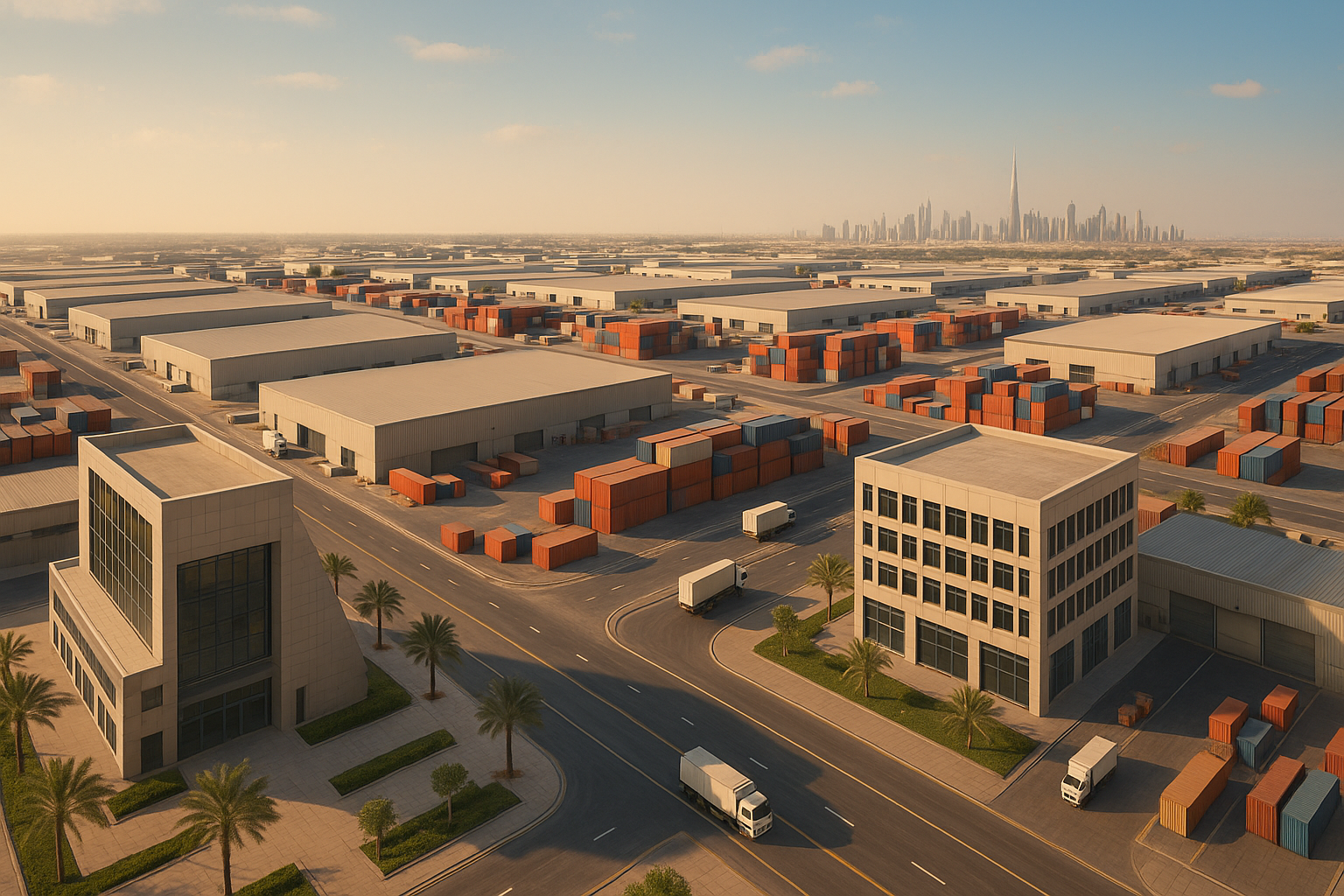
UAE free zones are a cornerstone of the country’s role as a global trade and logistics hub. For SMEs involved in trading, e-commerce, manufacturing, and regional distribution, free zones offer an efficient base for cross-border operations.
However, while the benefits are well understood, the regulatory framework governing customs, VAT, and corporate tax is often misunderstood in practice. Misinterpretation or weak execution can quickly lead to penalties, shipment delays, or the loss of tax advantages that free zones are designed to provide.
This guide explains how cross-border transactions from UAE free zones work in practice, with a focus on customs procedures, VAT treatment, corporate tax considerations, and common operational challenges SMEs face as they scale.
Understanding the Role of UAE
Free Zones in Cross-Border Trade
Free zones are designed to attract foreign investment and facilitate international trade. They typically offer 100% foreign ownership, purpose-built logistics infrastructure, and streamlined administrative processes.
From a regulatory standpoint, free zones sit at the intersection of multiple frameworks:
- For customs, they are treated as outside the UAE customs territory.
- For VAT, certain free zones are classified as designated zones and receive special treatment for goods.
- For corporate tax, free zone entities may benefit from preferential rates if specific conditions are met.
Because these regimes interact, SMEs must understand how a single transaction can trigger obligations across customs, VAT, and corporate tax at different stages.
Customs Regulations for Free Zone Transactions
Free Zones and the UAE Customs Territory
Under UAE Customs Law and the GCC Common Customs Law, free zones are treated as areas outside the customs territory. As a result, goods imported into a free zone from outside the GCC can generally be:
- Stored
- Processed
- Assembled
- Re-exported
without incurring customs duty at the point of entry.
This structure supports activities such as regional warehousing, light manufacturing, and consolidation before onward shipment.
Moving Goods from a Free Zone to the UAE Mainland
When goods move from a free zone into the UAE mainland, they are considered imported into the UAE. In most cases:
- Customs duty applies at 5%
- Duty is calculated on the CIF value (cost, insurance, and freight)
- A full customs declaration must be submitted
Supporting documentation typically includes commercial invoices, packing lists, and customs declarations. Errors in valuation or HS code classification can lead to reassessments, fines, or shipment delays.
Transfers Between Free Zones
Transfers between free zones are generally not subject to customs duty, provided:
- Goods do not physically enter the mainland during transit
- Correct transfer documentation is filed
- Customs procedures are followed at both the sending and receiving zones
Incorrect routing or incomplete documentation can unintentionally trigger customs exposure.
Exports from Free Zones
Exports from free zones to destinations outside the UAE are not subject to UAE customs duty. However, exporters must still:
- File export declarations
- Retain shipping and transport documents
- Use correct HS codes
For exports within the GCC, certificates of origin may be required to benefit from preferential tariff treatment in the destination country.
VAT Treatment of Free Zone Transactions
Designated Zones and VAT Treatment
The UAE VAT Law distinguishes between designated zones and other free zones. Designated zones (such as JAFZA, DMCC, and DAFZA) are treated as outside the UAE for VAT purposes for the supply of goods, provided specific Federal Tax Authority conditions are met.
This treatment does not automatically apply to services.
VAT on Exports
Exports of goods from free zones to locations outside the UAE are generally zero-rated for VAT, provided:
- The goods physically leave the UAE
- Export documentation is retained
- FTA conditions are satisfied
Zero-rating allows businesses to charge 0% VAT while recovering eligible input VAT on related costs.
VAT on Supplies to the Mainland
When goods are supplied from a free zone to the UAE mainland:
- 5% VAT typically applies
- VAT is calculated on the customs value plus customs duty
- VAT must be correctly reflected on tax invoices
Mainland buyers may recover VAT as input tax if registered and eligible.
VAT on Services
Services supplied by free zone entities are generally treated as supplied within the UAE and are subject to VAT unless a specific exemption or zero-rating applies. Place-of-supply rules depend on the nature of the service, the customer’s location, and whether the customer is VAT-registered.
Misclassifying services is a common source of VAT exposure for free zone businesses.
VAT Record-Keeping
Businesses must retain VAT-related records — including invoices, customs documentation, and proof of export — for at least five years. Weak documentation can result in reclassification of zero-rated supplies, denied input VAT recovery, or penalties during audits.
Corporate Tax Implications for
Free Zone Businesses
Qualifying Free Zone Person (QFZP)
Under the UAE corporate tax regime, free zone entities may benefit from a 0% corporate tax rate if they qualify as a Qualifying Free Zone Person (QFZP).
To qualify, businesses must meet conditions such as:
- Being incorporated in a free zone
- Maintaining adequate economic substance in the UAE
- Preparing audited financial statements
- Earning only qualifying income
Qualifying vs. Non-Qualifying Income
Qualifying income generally includes income derived from:
- Transactions with non-UAE residents
- Transactions with other free zone entities (subject to conditions)
Income attributable to mainland UAE activities is typically non-qualifying and subject to the standard 9% corporate tax rate. Accurate segregation of income streams is critical.
Transfer Pricing and Economic Substance
Free zone entities transacting with related parties must comply with UAE transfer pricing rules, including arm’s-length pricing and supporting documentation. Economic substance requirements also apply, requiring businesses to demonstrate that core activities and decision-making occur in the UAE.
Common Operational Challenges
for SMEs
Customs Declaration Errors:
Incorrect HS codes, undervaluation, or missing documents often arise when logistics and finance teams work in silos. These errors can trigger audits, delays, and reassessments.
VAT and Customs Data Misalignment:
Mismatches between customs declarations, invoices, and VAT returns are a frequent audit trigger. Even small inconsistencies in values or product descriptions can disrupt VAT recovery and cash flow.
Documentation and Audit Readiness:
Many SMEs underestimate the importance of record-keeping until an audit occurs. Inability to produce documentation on demand can lead to penalties, loss of zero-rating, or prolonged audits.
Conclusion
UAE free zones offer significant advantages for SMEs engaged in cross-border trade, but those advantages depend on disciplined execution rather than assumptions. Customs, VAT, and corporate tax rules are highly procedural, and even small errors can erode the benefits free zones are meant to deliver.
Businesses that succeed in this environment typically invest early in structured processes, clear separation between mainland and non-mainland activities, and strong coordination between finance, logistics, and operations teams. As transaction volumes grow, reducing manual handling of invoices and payments and maintaining consistent records becomes increasingly important.
Free zones are not simply a regulatory construct — they are an operational model. When managed correctly, they enable SMEs to trade across borders efficiently while remaining compliant with UAE regulations.
FAQs
Can free zone businesses invoice in foreign currencies for cross-border transactions?
Yes. Free zone businesses commonly invoice in foreign currencies for cross-border trade. However, for VAT and accounting purposes, amounts must be converted to AED using the exchange rate approved by the UAE Central Bank on the date of supply.
Do free zone rules apply the same way to digital goods or software exports?
Digital goods and software are treated differently from physical goods. Customs rules generally do not apply, but VAT treatment depends on the nature of the supply and the customer’s location. Services and digital supplies often fall under place-of-supply rules rather than export rules.
How does cross-border trade from free zones affect cash flow planning?
Extended payment terms, customs clearance timelines, and VAT recovery cycles can all impact cash flow. SMEs must account for the timing of duty payments, VAT settlements, and customer collections when planning liquidity for cross-border operations.
Streamline Your Accounts Receivable
Automate invoicing, payment collection, and cash flow management with Kema's intelligent platform. Improve efficiency and get paid faster